 1257 Annapolis Rd. | Odenton, MD 21113
 410-777-5252
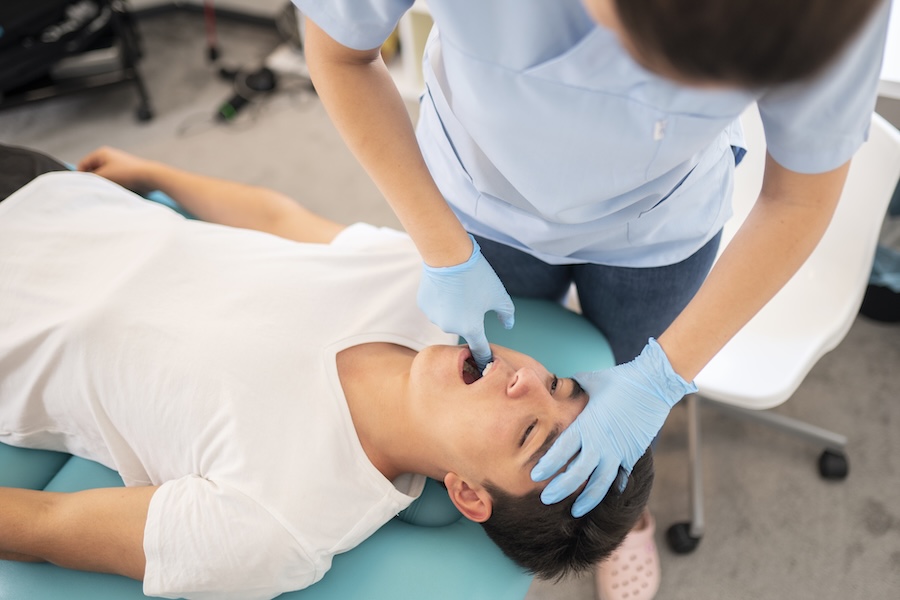
You might not hear much about orofacial myofunctional therapy in everyday conversation — but for some kids, it’s the missing piece that helps everything else work better. From breathing and chewing to speech and tooth alignment, the muscles around the mouth play a bigger role than most people realize.
At True Dental in Odenton, MD, Dr. Jai Shin and Dr. Julie Shin keep an eye on these patterns during your child’s routine visits. Because sometimes a habit like mouth breathing, tongue thrusting, or even persistent thumb-sucking isn’t just a phase — it’s a clue that a little retraining could go a long way.
What Myofunctional Therapy Actually Is
Orofacial myofunctional therapy (OMT) is a bit like physical therapy, but for the muscles in the face and mouth. It helps kids strengthen and retrain how they use their lips, tongue, cheeks, and jaw. When those muscles work well together, kids chew better, breathe easier, speak more clearly, and often develop more balanced smiles.
It’s not just about straight teeth — it’s about how everything functions behind the scenes.
Signs to Watch For
A child doesn’t have to show all the signs to benefit from therapy. Even one or two of these can be worth bringing up at their next dental visit:
- Mouth breathing (especially at night or during rest)
- Tongue thrusting when swallowing
- Speech delays or difficulty with certain sounds
- Trouble chewing or food lingering in the cheeks
- Thumb or finger sucking beyond toddler years
- Crowding or narrow arches as permanent teeth come in
These habits can change the way a smile develops over time. And if they’re spotted early, they’re often easier to correct.
Why It Matters for Oral Development
Teeth and jaws don’t grow in a vacuum — they respond to the muscles around them. A tongue that rests too low or pushes forward can change the way teeth come in. Mouth breathing affects jaw posture and sleep quality. Even a slight difference in how a child swallows can put pressure in all the wrong places.
That’s why Dr. Shin and Dr. Shin look at more than just cavities or crooked teeth. They’re watching how your child’s mouth moves — because long-term health often starts with small daily patterns.
What Happens During Therapy
OMT doesn’t involve drills or numbing. Instead, it’s a series of small, guided exercises. Your child might practice:
- Holding their tongue in a better resting spot
- Strengthening lip closure
- Swallowing with better coordination
- Breathing through the nose instead of the mouth
The goal is to build new muscle habits that support healthy development — without adding stress or discomfort. Most exercises are done at home with short daily practice and occasional in-office check-ins.
When to Ask About It
Bring it up during your child’s next appointment, especially if you’ve noticed some of the patterns above or if other providers (like a pediatrician or speech therapist) have mentioned similar concerns.
You don’t need to make that call on your own — Dr. Jai Shin and Dr. Julie Shin can evaluate your child’s function, explain what’s normal at different ages, and walk you through whether myofunctional therapy could be helpful.
Orofacial Myofunctional Therapy at True Dental in Odenton, MD
Not every child needs myofunctional therapy — but for some, it can make a noticeable difference in how they speak, eat, sleep, and grow. If your child has habits or symptoms that just don’t seem to shift on their own, it may be time to look a little deeper.
Call True Dental in Odenton, MD to schedule an evaluation and get expert guidance on whether orofacial myofunctional therapy is a good fit for your child’s needs.